
How to make a good pair of shoes last ten years
Almost nothing that arrives at our benches beyond repair was worn out. It was dried on a radiator, cleaned with the wrong thing, or worn two days running.
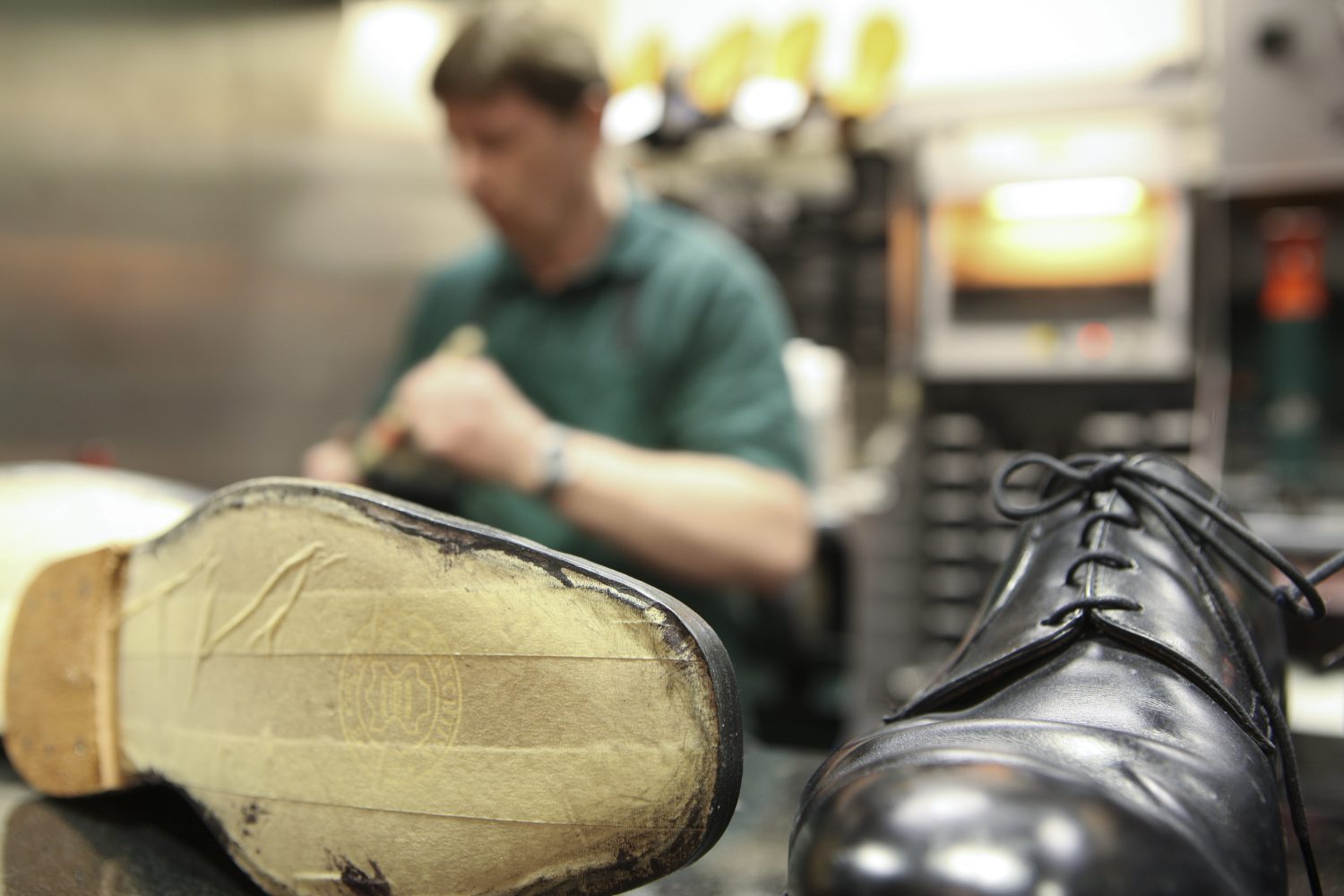
We see maybe forty pairs a day across our shops. The ones that are genuinely finished — where the upper has gone and there is nothing to build on — are rare. Most of what comes in beyond economic repair was killed by one of four things, and all four are avoidable.
1. Heat
Leather is skin. It holds oils, and heat drives them out. A wet shoe on a radiator overnight will be dry by morning and brittle within a month, and the first crease across the vamp becomes a crack that no cream will close.
Stuff wet shoes with newspaper, put them somewhere with moving air, and leave them two days. Then condition them, because the water took the oils with it on the way out.
2. Wearing the same pair two days running
A day's wear puts a surprising amount of moisture into a lining. Given a day off, it dries out. Given no day off, it stays damp, and damp lining rots at the heel counter — the part you cannot see and cannot easily fix.
Two pairs alternated will each outlast one pair worn daily by more than double. This is the single cheapest thing on this page: it costs nothing.
3. Grit
London dust is abrasive. Left on the shoe, it works into the grain and cuts it every time the leather flexes. Thirty seconds with a brush at the door does more for the life of a shoe than an hour of polishing once a season.
4. The wrong product, or only one product
Most people own wax and nothing else. Wax sits on the surface and shines; it does not feed anything. Cream carries pigment and oils into the leather, and it is what keeps the shoe alive.
The order is: brush the dust off, clean if it needs it, cream to feed and colour, let it sit, brush it off, then wax only where you want shine. Cream a few times a season. Wax whenever you like.
What we would buy first
If you own nothing: a horsehair brush, a jar of cream in roughly your colour, and a pair of unfinished cedar trees. That is under fifty pounds and it will add years. Wax is fourth on the list, not first.
And when it does need a bench
Get soles replaced before they wear through to the welt. Once water is getting into the insole the repair is twice the job and half the result. A sole that is thin is a cheap fix; a sole with a hole is an expensive one.
Not sure what yours needs?
Bring it to any counter. Two minutes with a craftsperson beats any amount of reading — including us telling you it is not worth the money.